
Montessori Activities Parents Can Do at Home: Simple Ways to Build Independence, Focus & Early Literacy
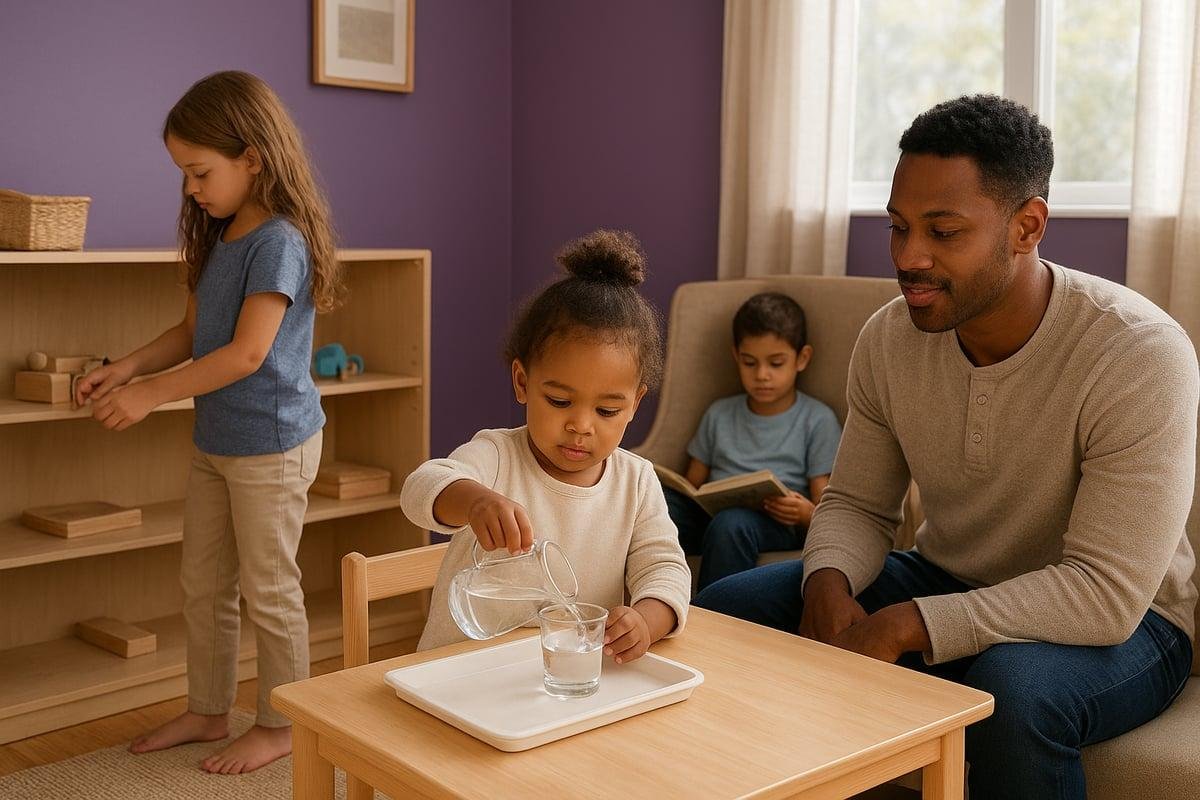


Parents often associate Montessori learning with special classrooms and expensive materials. In reality, many Montessori-inspired activities can be introduced at home using everyday objects. The key ideas are simple: give children age-appropriate independence, provide an organized environment, demonstrate an activity clearly, and allow them time to practise.
A Montessori-style home environment can include practical-life activities, sorting, matching, puzzles, language games, books, and other hands-on experiences. The emphasis is less on keeping children entertained and more on giving them meaningful opportunities to do things for themselves.
For Pakistani parents looking for educational books, phonics resources, flash cards, and learning toys, Book World Pakistan offers a range of early-learning materials that can complement these activities.
What Is Montessori Learning at Home?
Montessori-inspired learning encourages children to learn through purposeful, hands-on experiences. Instead of completing every task for your child, you demonstrate how something is done and then provide an opportunity for the child to try.
A simple example is pouring water from a small jug into a cup. It may seem like an ordinary household task, but pouring requires controlled hand movements and coordination. Montessori practical-life materials commonly use pouring exercises to develop fine-motor control.
At home, the goal isn’t to reproduce an entire Montessori classroom. A small shelf, a few carefully selected activities, and a regular routine can provide plenty of opportunities for independent learning.
1. Pouring and Transferring Activities
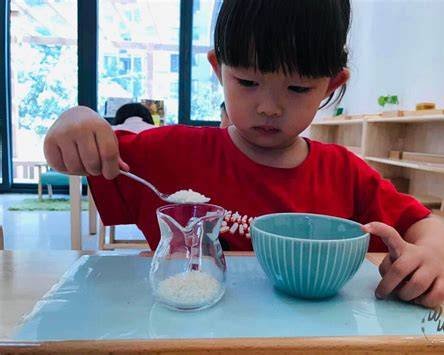
One of the easiest Montessori-inspired activities is transferring something from one container to another. Parents can provide two small bowls or cups and let the child transfer dry rice, pasta, large safe objects appropriate to the child’s age, or water under suitable supervision. Depending on the material, children can use a spoon, scoop, or small jug.
This type of activity gives children practice with hand-eye coordination, controlled movements, and concentration. Spooning and pouring are established practical-life exercises in Montessori environments.
Parent tip: Start with dry materials before introducing water, especially with younger children. Choose materials that don’t create a choking hazard.
2. Sorting by Colour, Shape or Size
Put a small selection of objects on a tray and ask your child to sort them. For example, children might separate red, blue, and yellow blocks; arrange objects from small to large; match identical shapes; or group toy animals by type.
Don’t rush to correct every mistake. Give your child an opportunity to look again, compare, and solve the problem. This can turn an ordinary basket of toys into a simple Montessori-inspired learning activity.
3. Let Children Help With Everyday Tasks
Some of the most useful learning materials are already in your home. A young child can help put toys back on a shelf, place clothes in a laundry basket, wipe a small table, water plants, arrange books, pair socks, or carry safe items to their proper places.
The task should be real, manageable, and meaningful. A useful rule for parents is:
- Show slowly → let your child try → help only when necessary.
Repeated opportunities to complete manageable tasks can gradually encourage independence and responsibility.
4. Create a Child-Friendly Learning Shelf
Instead of placing dozens of toys in one large box, try displaying a smaller selection of activities where your child can reach them. For example, one shelf could contain a puzzle, a sorting activity, a basket of books, flash cards, a drawing or tracing activity, and a practical-life tray.
A prepared environment—where materials are orderly and accessible to the child—is a central idea in Montessori-at-home approaches. Rotate activities periodically rather than displaying everything at once.
5. Introduce Letter Sounds With Phonics
Montessori-inspired learning can also be incorporated into early literacy. Before expecting children to read complete sentences, parents can spend time helping them hear and recognize the sounds represented by letters. For example:
- m → /m/
- s → /s/
- a → /a/
Show a picture, say its name clearly, and emphasize its beginning sound:
- m — moon
- s — sun
- c — cat
Keep sessions short and playful.
Recommended: Smart Flash Cards – Basic Phonics
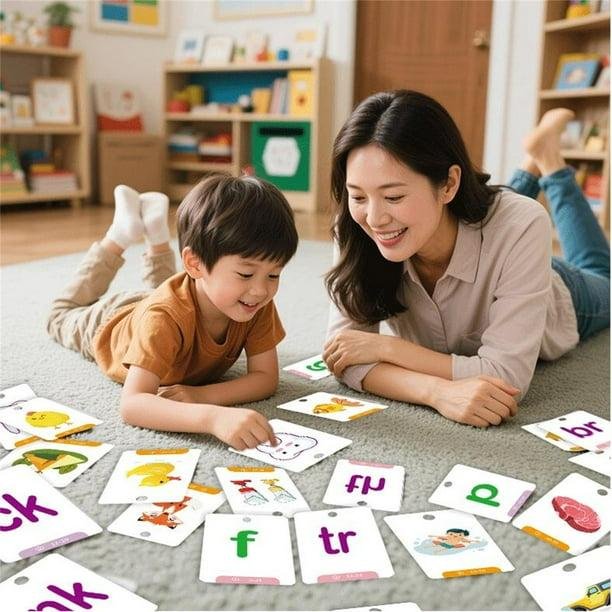


Parents looking for a ready-made resource can consider Phonics at Book World Pakistan. According to the current product listing, the pack contains 32 double-sided flash cards and covers areas including blending, vowel sounds, and syllables. The cards use pictures and age-appropriate vocabulary, making them suitable for guided or independent early learning activities.
One easy home activity is to place three cards in front of your child, make a letter sound, and ask:
“Which picture starts with this sound?”
6. Move From Letter Sounds to CVC Words
Once a child understands several basic sounds, parents can gradually introduce CVC words. CVC means:
- Consonant + Vowel + Consonant
Examples include:
- c-a-t → cat
- d-o-g → dog
- s-u-n → sun
- p-e-n → pen
- p-i-g → pig
Instead of asking children simply to memorize each word, encourage them to identify the individual sounds and blend them together. Say them slowly:
c… a… t → cat
Then let the child repeat the sounds and blend the word.
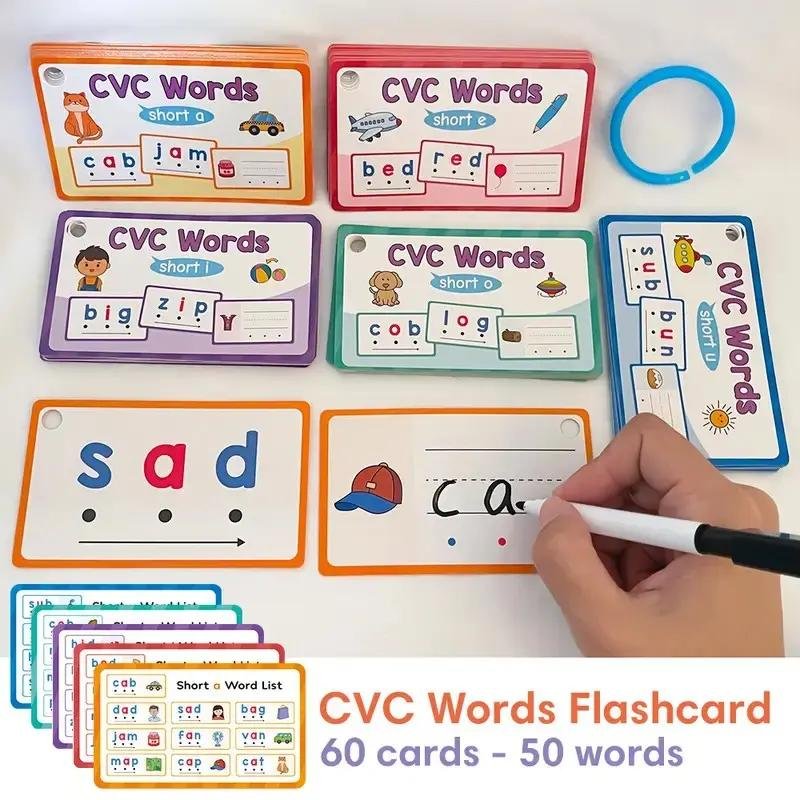
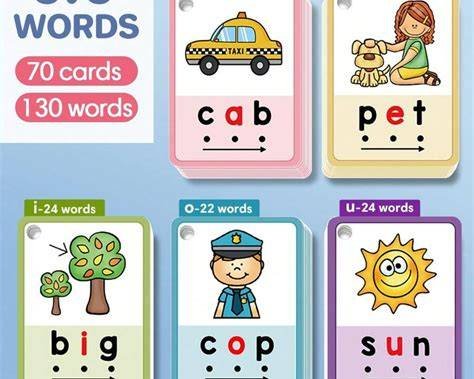
Try a CVC Word-Building Game
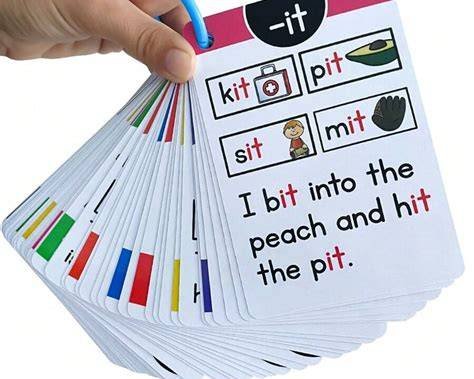
Book World Pakistan currently lists a CVC Word List Phonics Spinner Game Kit, featuring colourful letter cards as a hands-on word activity. View the CVC and phonics learning section at Book World Pakistan.
You can also create a simple DIY version at home. Write letters on small cards and let your child physically arrange them:
c + a + t
Ask the child to touch each letter while making its sound, then slide a finger underneath all three letters while blending:
c-a-t → cat
This combines movement, visual recognition, and early reading practice.
7. Match Objects or Pictures With Words
Once your child can read a few CVC words, turn reading into a matching activity. Place familiar objects or pictures on a table—for example, a cup, pen, bag, and hat. Make simple word cards and ask the child to match each written word with the correct object or picture.
You can reverse the activity too: show an object and ask the child to find its word. This makes reading more concrete than simply looking at words on a worksheet.
8. Add Phonics Books to the Routine
Flash cards are useful for focused practice, but children also need opportunities to encounter their developing phonics skills in books. Book World Pakistan carries several Oxford Read Write Inc. Phonics resources. Current listings include Pink Set 3, Orange Set 4, Yellow Set 5, and Grey Set 7, with availability varying by set.
For example, the Read Write Inc. Phonics Yellow Set 5 Non-Fiction Books are designed to provide additional reading practice connected with phonics learning. Parents starting at an earlier stage can also consider the Read Write Inc. My Reading and Writing Kit: Early Sounds and Blending. The kit includes sound flashcards, a handwriting book, wipe-clean writing practice, picture prompts, and a parent’s handbook.
That combination works particularly well for a home routine because parents can move naturally from:
- Sound recognition → blending → word reading → handwriting → books.
9. Try a Montessori-Style Reading Basket
Create a small reading basket rather than keeping every book available at once. Choose around five or six books appropriate to your child’s current ability. Include familiar favourites alongside one or two books that provide a gentle challenge.
Place the basket somewhere accessible and allow your child to choose what to read. For an early reader, you might combine:
- Phonics flash cards + CVC activities + a phonics reader + one favourite storybook.
This gives literacy practice some structure without turning home reading into a formal lesson.
10. Use Tracing and Pre-Writing Activities
Reading and writing development can also be supported through activities that strengthen children’s hands and help them practise controlled movements. Try drawing lines in sand or flour with a finger, tracing large letters, using play dough, completing simple puzzles, transferring objects with tongs, colouring, or using wipe-clean tracing boards.
Book World Pakistan also lists a 2-in-1 Alphabet & Tracing Board designed for toddlers and preschool children. These kinds of hands-on activities can be incorporated before or alongside pencil-and-paper writing.
A Simple 20-Minute Montessori-Inspired Home Routine
You don’t need hours of structured learning. A short routine might begin with around five minutes of practical-life activity, followed by five minutes of phonics flash cards, five minutes building or blending CVC words, and finish with five minutes of shared reading.
The important part isn’t completing a fixed number of cards or pages. Watch your child’s concentration. When interest disappears, it is usually better to finish positively and return to the activity another day.
Recommended Early-Literacy Resources From Book World Pakistan
For parents building a Montessori-inspired literacy corner at home, useful starting points from the current Book World Pakistan catalogue include Smart Flash Cards – Basic Phonics, the CVC Word List Phonics Spinner Game Kit, Read Write Inc. My Reading and Writing Kit, Read Write Inc. Phonics readers, and 120 Sight Words Flash Cards for children who are ready for later-stage word-recognition practice.
Browse the full collection at Book World Pakistan.
Final Thoughts
Montessori learning at home doesn’t have to be complicated. Pouring water, sorting objects, arranging books, matching pictures, sounding out letters, and building simple CVC words can all become valuable learning opportunities.
The parent’s role is not necessarily to provide the answer immediately. Demonstrate the activity, make suitable materials accessible, observe your child, and give them enough time to experiment and practise.
When practical-life activities are combined with phonics flash cards, CVC word games, and carefully selected reading books, parents can create a simple home-learning environment that supports independence while building early literacy skills.
Book World Pakistan — Learn • Read • Explore • Grow
📱 WhatsApp: 03137854726