
How to Teach Phonics at Home: A Simple Guide for Parents

Learning to Read: A Guide to Phonics
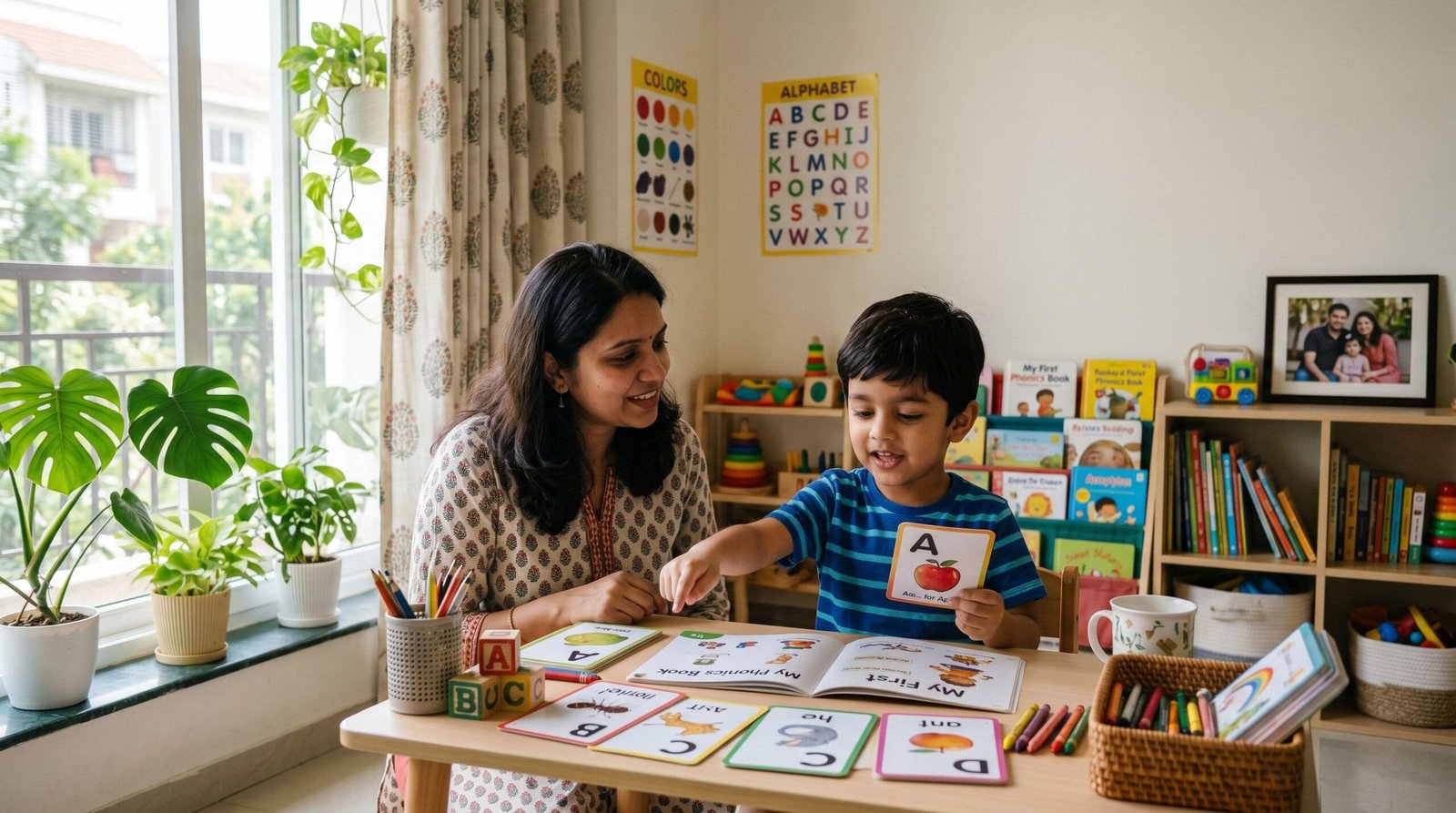
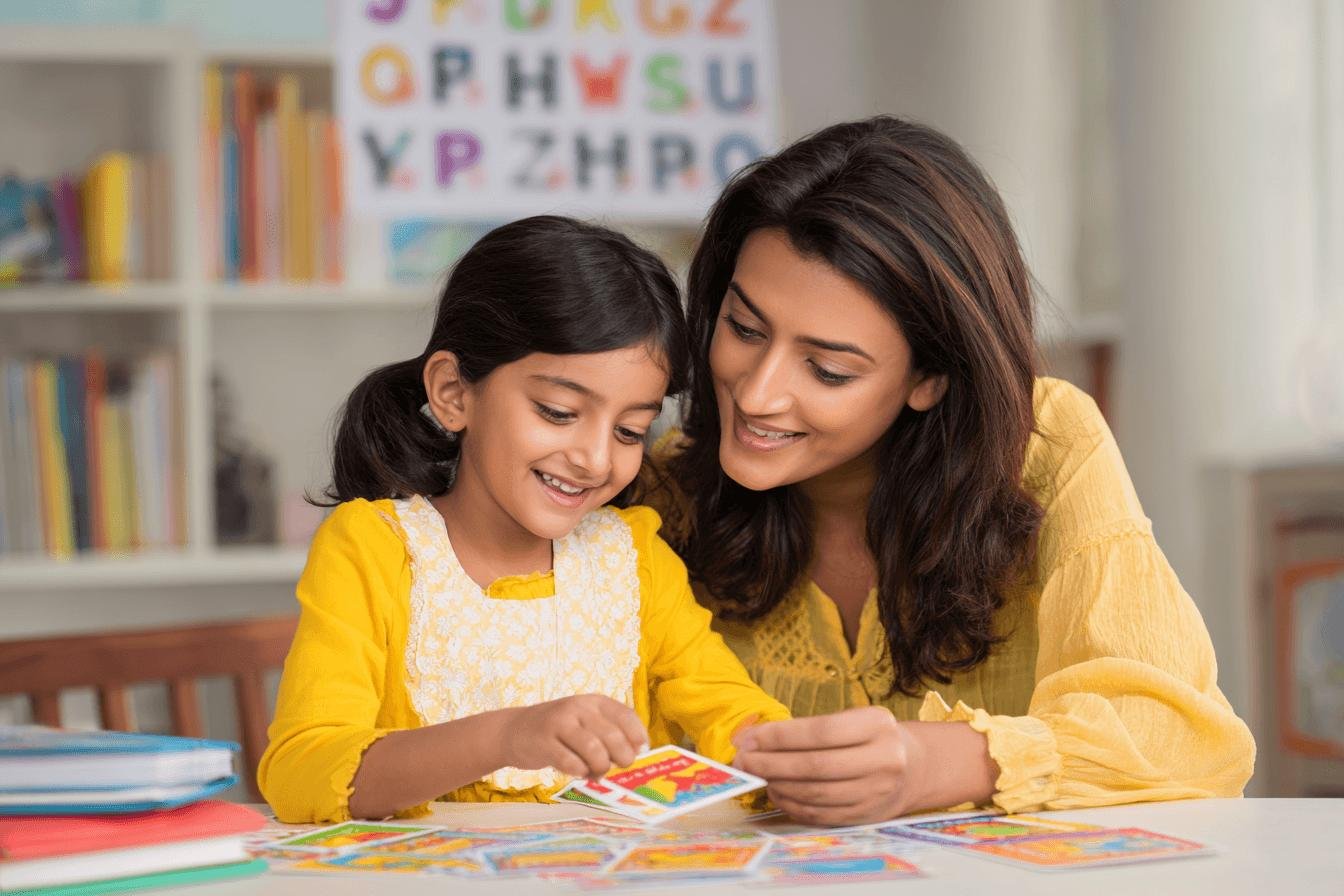
Learning to read is one of the most important milestones in a child’s early years. Phonics makes this journey easier by teaching children the relationship between letters and sounds. Instead of simply memorizing whole words, children learn how to recognize sounds, blend them together, and gradually read unfamiliar words independently. Parents do not need to be trained teachers to support phonics learning at home. With 10–15 minutes of regular practice, suitable flash cards, simple CVC activities, and beginner phonics books, everyday learning can become both effective and enjoyable. Book World Pakistan offers phonics flash cards, CVC learning resources, and Oxford Read Write Inc. books that parents can use to build a structured home-reading routine.
What Is Phonics?
Phonics teaches children to connect written letters or groups of letters with the sounds they represent. For example, children first learn individual sounds such as /c/, /a/, /t/ and then learn to blend them:
c + a + t → cat
Once a child understands this process, the same skill can be applied to many other simple words, such as bat, mat, sit, pin, dog, log, sun, and cup. Three especially useful early skills are letter–sound correspondence, blending, and segmenting. A study involving KG–1 learners in Pakistan also examined instruction in these three areas and reported significant improvement after the phonics intervention, although its one-group study design means the results should be interpreted with appropriate caution.
1. Start With Letter Sounds, Not Just Letter Names
Children often learn the alphabet as A, B, C, D, but reading requires them to recognize the sounds represented by letters as well. Show your child a letter and practice its common sound. Keep the activity short and playful. You can ask your child to find objects beginning with the sound:
- /b/ – ball, bag, book
- /m/ – mat, mug, milk
- /s/ – sun, sock, spoon
Try introducing only a few sounds at a time. Once your child can confidently recognize them, add new sounds while continuing to review the old ones.
Recommended Resource: Smart Flash Cards – Basic Phonics
Smart Flash Cards – Basic Phonics at Book World Pakistan. These 32 double-sided flash cards are designed for early learners and use engaging pictures and age-appropriate vocabulary. According to the Book World Pakistan product listing, they cover areas including blending, vowel sounds, and syllables, making them useful for guided home practice.
2. Move From Sounds to CVC Words
After your child becomes familiar with several letter sounds, introduce CVC words. CVC stands for:
- C – Consonant
- V – Vowel
- C – Consonant
Examples include:
- cat
- dog
- sun
- pen
- sit
- map
- cup
- hen
- fox
- pig
CVC words are particularly useful because children can practice hearing individual sounds and then blending those sounds into a complete word. For example:
- m → a → p → map
- s → i → t → sit
- d → o → g → dog
Avoid rushing this stage. Being able to blend simple words confidently provides an important foundation for more advanced reading.
3. Make CVC Learning Hands-On
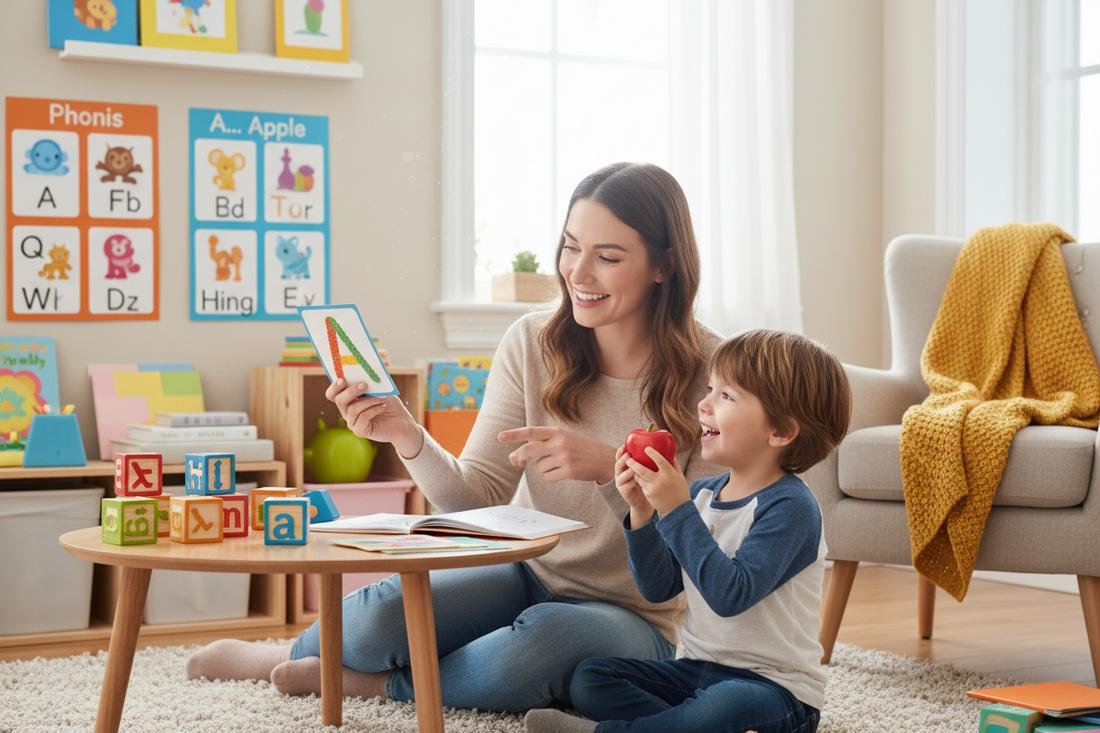
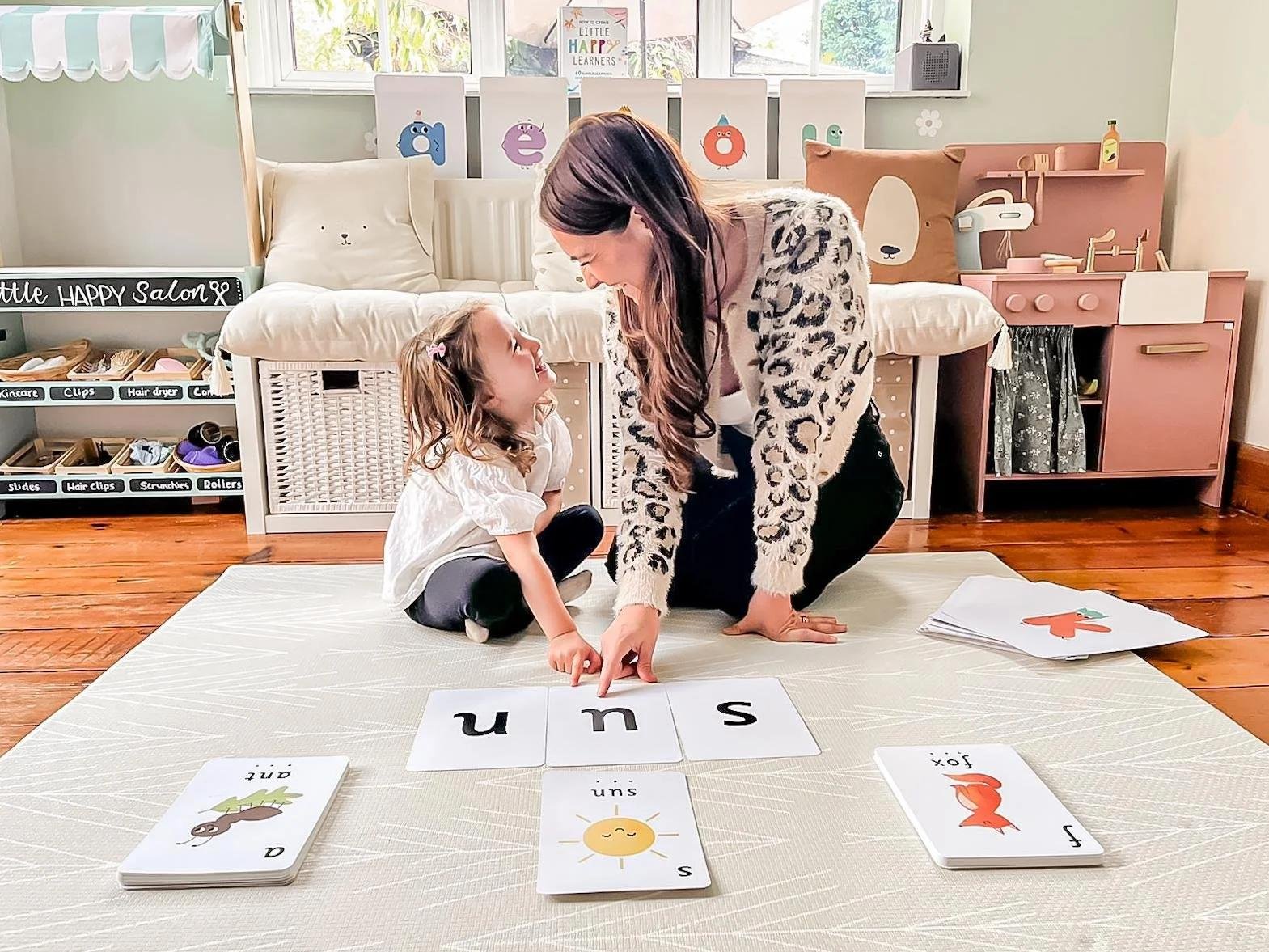
Instead of asking your child to repeatedly copy words, turn CVC practice into a game. Put three letter cards on the table:
c | a | t
Ask your child to say each sound separately. Then slowly move the cards closer together while blending the sounds:
/c/ … /a/ … /t/
/c/-/a/-/t/
CAT!
Change only one card:
cat → mat → sat → rat
This helps children notice that changing one sound creates a completely different word.
Recommended Resource: CVC Word List Phonics Spinner Game Kit
Book World Pakistan currently lists a CVC Word List Phonics Spinner Game Kit with colorful letter cards among its phonics learning resources. It is designed as a teaching aid for home or classroom activities.
4. Practice Blending Every Day
Blending is the ability to combine separate sounds into a word. For example:
/s/ + /u/ + /n/ = sun
Parents can make this into a quick guessing game:
Parent: “What word am I saying? /d/…/o/…/g/.”
Child: “Dog!”
Start slowly and gradually reduce the pause between sounds. You can practice just five words per session. Short, successful practice is usually more manageable for young children than turning phonics into a long lesson.
5. Teach Segmenting Too
Reading requires blending sounds together, while spelling benefits from the reverse skill: segmenting. Say the word “dog.” Ask:
“What sounds can you hear?”
The child separates it:
/d/ – /o/ – /g/
You can use counters, blocks, magnetic letters, or flash cards. Ask the child to place one object down for every sound they hear. Fish, for example, has three phonemes even though it has four letters:
/f/ – /i/ – /sh/
This is a useful reminder that phonics is about sounds, not simply counting letters.
6. Add Writing to Phonics Practice
Once your child recognizes a sound, encourage them to write the corresponding letter. A simple routine is:
- See it → Say it → Trace it → Write it → Use it in a word
For example:
m → /m/ → trace “m” → write “m” → mat
This connects reading, sound recognition, and early handwriting.
Recommended Resource: Read Write Inc. My Reading and Writing Kit
Read Write Inc.: My Reading and Writing Kit – Early Sounds and Blending. This is a particularly useful all-in-one option available from Book World Pakistan. The listed kit includes simple-sound flashcards, a handwriting book, wipe-clean letter practice with a pen, picture prompts, and a parent handbook. It is designed to introduce phonics and early blending while supporting beginning reading and writing.
7. Progress to Phonics Reading Books
Flash cards teach and reinforce individual skills, but children also need opportunities to apply those skills while reading actual books. Once your child can blend simple words, introduce phonics readers that match their current reading level. Encourage the child to attempt decodable words rather than immediately telling them every unfamiliar word. Book World Pakistan currently carries several Oxford Read Write Inc. Phonics Book Bag levels, including Pink Set 3, Orange Set 4, Yellow Set 5, and Grey Set 7; the Blue Set 6 page was shown as sold out when the site was crawled.
Explore Oxford Read Write Inc. Phonics Books at Book World Pakistan. For example, the Yellow Set 5 listing contains ten non-fiction books designed to provide additional reading practice outside the classroom and reinforce phonics learning at the appropriate level.
A Simple 15-Minute Home Phonics Routine
You don’t need an hour-long lesson. Try a consistent routine:
- Minutes 1–3: Review previously learned sound cards.
- Minutes 4–6: Introduce or practice one new sound.
- Minutes 7–10: Build and blend CVC words.
- Minutes 11–13: Read a short phonics book or several decodable words.
- Minutes 14–15: Play a quick game or practice writing one or two words.
End while your child is still interested. Regular practice matters more than making an individual session long.
Make Phonics Fun, Not a Test
Children learn more comfortably when mistakes are treated as part of learning. Try activities such as a sound hunt around the house, matching pictures to beginning sounds, making words with magnetic letters, CVC word races, flash-card treasure hunts, rhyming games, and “Which sound is missing?” games. You can even practice during normal daily activities: “We have a cup. What sound does cup begin with?” This makes phonics part of everyday language rather than another homework assignment.
Recommended Phonics Learning Resources from Book World Pakistan
For parents building a home phonics program, a practical progression is Basic Phonics Flash Cards → CVC word-building activities → early sounds and blending resources → level-appropriate phonics readers. Book World Pakistan’s current catalogue includes products across these stages.
Visit Book World Pakistan to explore Phonics Flash Cards, CVC learning resources, Oxford Read Write Inc. books, activity workbooks, and other early-learning materials.
Final Thoughts
Teaching phonics at home doesn’t need to be complicated. Start with sounds, practice them regularly, move into CVC words, teach children to blend and segment, and then give them plenty of opportunities to use those skills in appropriate reading books. Most importantly, keep the experience positive. Every time a child looks at c-a-t, blends the sounds, and proudly says “cat!”, they are learning something bigger than one word—they are discovering how written language works.
Read • Blend • Practice • Play • Repeat
Book World Pakistan — Making Learning Fun for Every Child.
Shop Books & Learning Resources at Book World Pakistan
WhatsApp: 03137854726
Instagram: @bookworld.pakistan