How Parents Can Improve Children’s Reading Skills

A Practical Guide for Building Strong, Confident Readers at Home — by Book World Pakistan
Reading is one of the most valuable skills a child develops. Strong reading skills support vocabulary, comprehension, communication, writing, imagination, and learning across school subjects. Parents can play an important role in this development—not by turning home into another classroom, but by making reading a regular, enjoyable part of everyday life.
At Book World Pakistan, parents can find phonics resources, flash cards, early-reading books, activity books, and graded readers that can be used to support children at different stages of their reading journey.
Start With Phonics: Teach Children How Words Work
For beginning readers, phonics provides an important foundation. Instead of asking children to memorize every word, phonics teaches them to connect letters with sounds and then blend those sounds together.
For example:
- c + a + t → cat
- s + u + n → sun
- p + e + n → pen
Parents can begin with individual letter sounds and gradually introduce blending, vowels, syllables, and simple words.
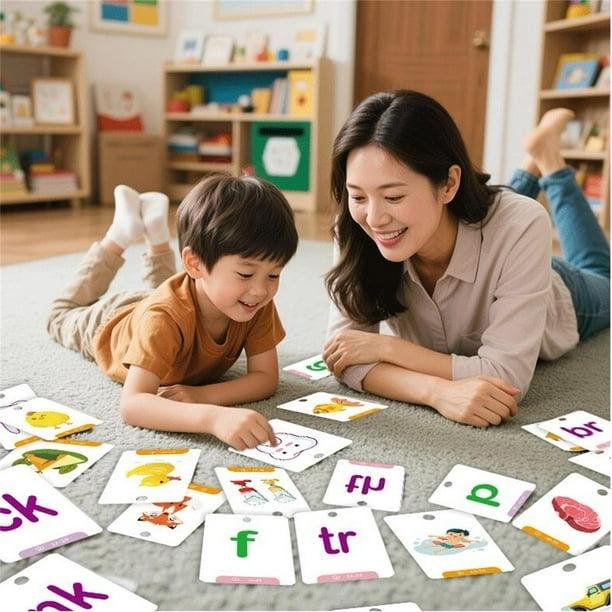
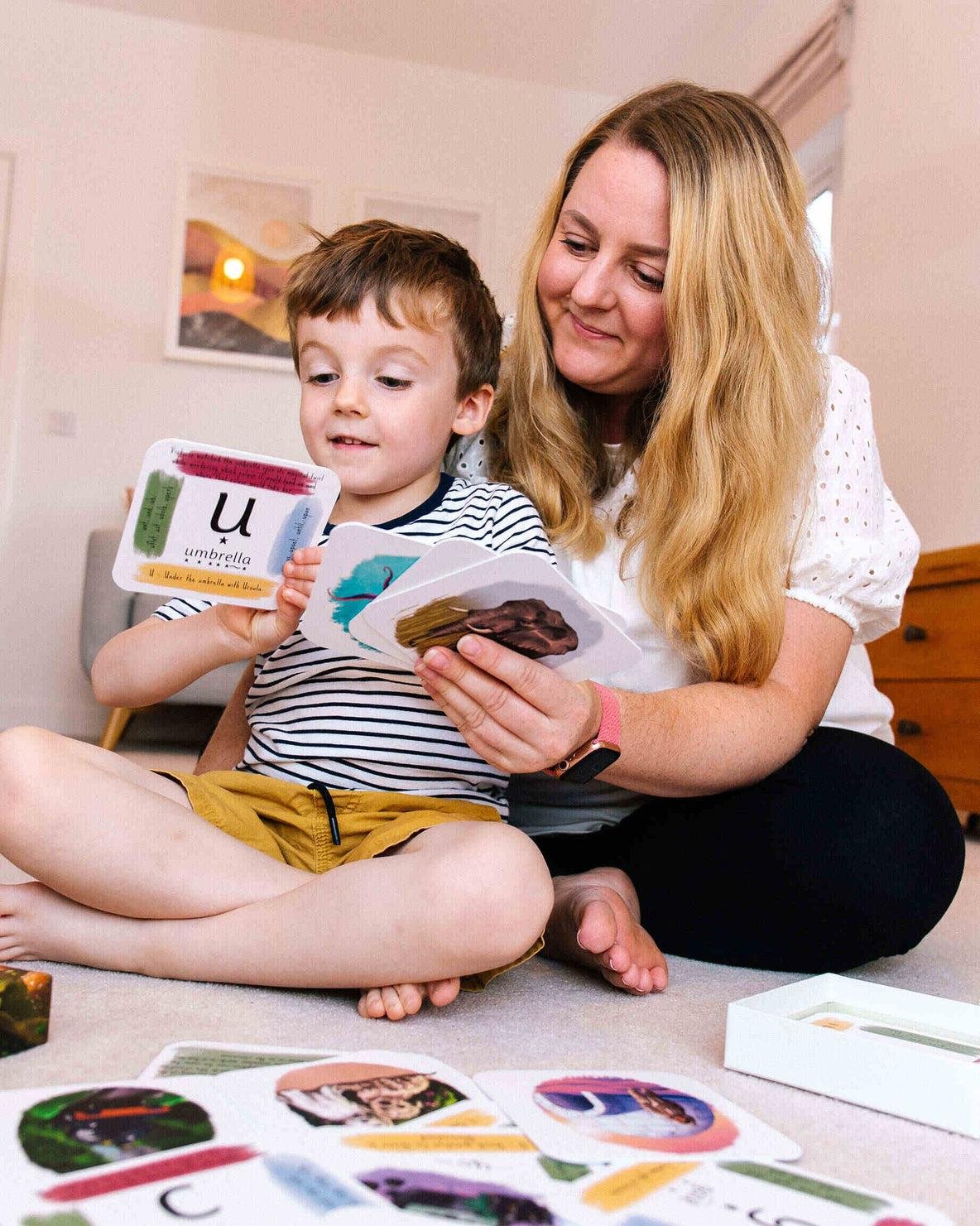
A useful option available from Book World Pakistan is Smart Flash Cards – Basic Phonics. The set contains 32 double-sided cards and covers areas including blending, vowel sounds, and syllables. The cards use pictures and age-appropriate vocabulary to make early phonics practice more visual and engaging.
Turn Phonics Into a Game
Young children often learn better when an activity feels like play. Instead of conducting a long phonics lesson, parents can spend 10–15 minutes playing simple sound and word games.
Show a phonics card and ask your child to say the sound. Find objects around the house beginning with that sound. Place two or three sounds together and ask your child to blend them. You can also make a “word hunt” in which the child searches for simple words in books, packaging, signs, or flash cards.
The goal is regular practice without making reading feel like a test.
Introduce CVC Words Early
Once children recognize basic letter sounds, CVC words—Consonant-Vowel-Consonant words—are an excellent next step.
Examples include cat, dog, sun, map, sit, hen, cup, and bed.
CVC practice helps children understand that individual sounds can be blended into complete words. Instead of simply telling a child that a word says “cat,” encourage them to work through it:
/c/ → /a/ → /t/ → cat
Book World Pakistan currently lists a CVC Word List Phonics Spinner Game Kit featuring colorful letter cards. It is designed as an educational word game that can be used for home learning and teaching activities.
Use Flash Cards for Short, Frequent Practice
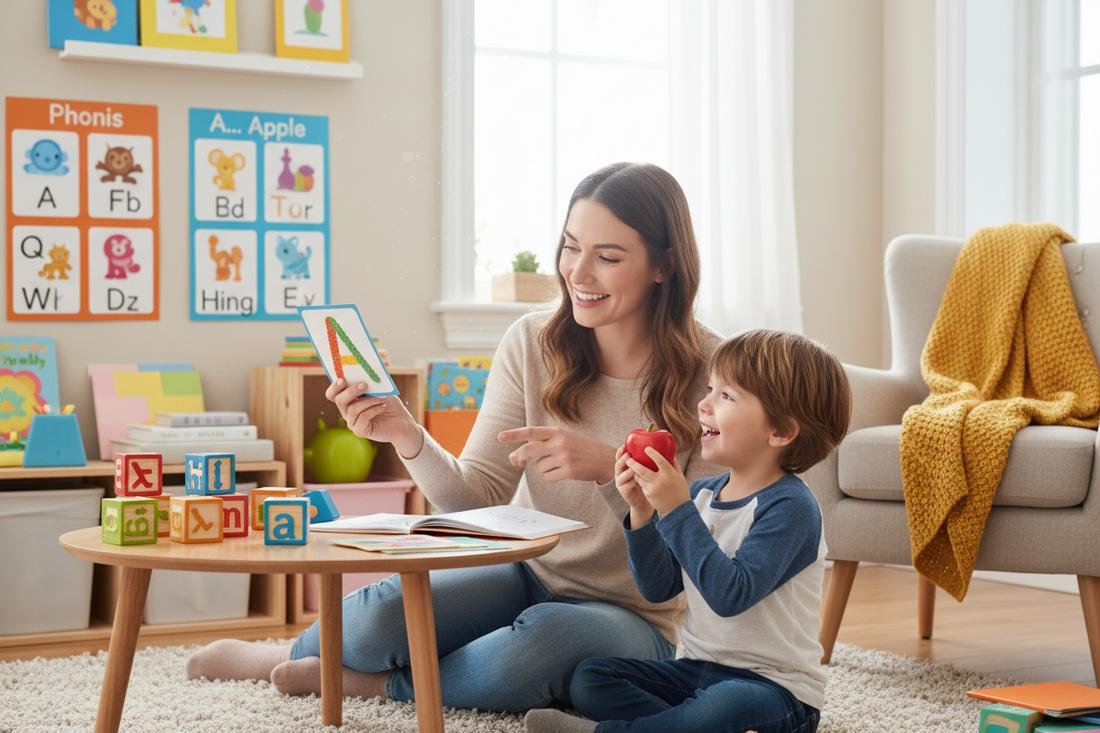
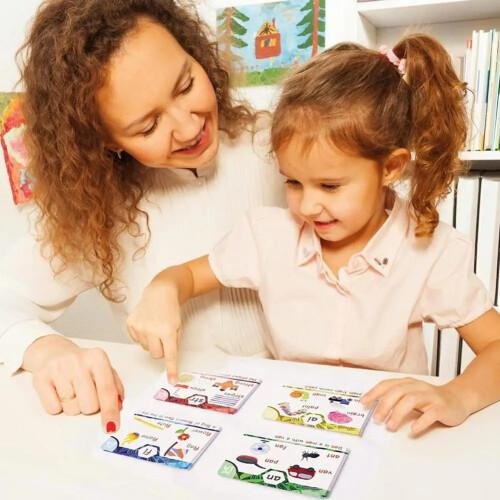
Flash cards can be particularly useful when practice is kept short and interactive. Parents can use them for sound recognition, blending, CVC words, vocabulary, sight words, and quick reading games.
Book World Pakistan’s online shop also lists 120 Sight Words Flash Cards, alongside other early-learning flash-card resources.
Rather than showing dozens of cards at once, select perhaps five to ten words. Review them, mix their order, put difficult cards aside for extra practice, and celebrate improvement. Once those words become familiar, introduce a few new ones.
This approach can make progress much less overwhelming for a young learner.
Move From Sounds → Words → Sentences → Books
A common mistake is moving children into books before they are comfortable decoding simple words. A gradual progression is often easier:
- Letter sounds → blending → CVC words → sight words → short sentences → simple readers → longer stories
As children become more confident, give them books that allow them to apply the phonics patterns they have already learned.
One comprehensive option is the Read Write Inc. My Reading and Writing Kit: Early Sounds and Blending available through Book World Pakistan. It includes simple-sound flashcards, a handwriting book, wipe-clean writing practice, picture prompts, and a parent handbook. It is specifically intended to introduce phonics and support children’s first steps in reading and writing.
Choose Graded Phonics Readers
After children begin blending words independently, give them books at an appropriate reading level. Books that are too difficult can lead to frustration, while books that are far below their ability may provide too little challenge.
Book World Pakistan carries several Oxford Read Write Inc. Phonics Book Bag Books, including Pink Set 3, Orange Set 4, Yellow Set 5, Blue Set 6, and Grey Set 7 listings. These books provide progressively structured opportunities for reading practice.
The Yellow Set 5 Non-Fiction books, for example, are described as being closely matched to the Read Write Inc. phonics programme so children can reinforce phonics learning through additional reading practice at home.
Read With Your Child Every Day
Reading practice does not always mean asking the child to read alone. Reading together matters too.
Set aside a regular time—perhaps after school or before bedtime—and let your child choose an interesting book. Read some parts aloud yourself and encourage your child to read words or sentences appropriate to their ability.
While reading, occasionally ask questions such as:
- “What do you think will happen next?”
- “Why did the character do that?”
- “Can you find a word beginning with S?”
- “Which picture gives us a clue about the story?”
These conversations move reading beyond simply pronouncing words and encourage children to think about meaning.
Don’t Correct Every Mistake Immediately
When a child struggles with a word, give them a moment to work it out. You might point to the first letter and ask, “What sound does this make?” Then encourage them to blend the remaining sounds.
Constant interruption can make reading stressful. Gentle guidance gives children an opportunity to solve problems independently and build confidence.
Create a Reading-Friendly Home
Children are more likely to read when books are visible and easily accessible. A small basket or shelf containing storybooks, phonics readers, picture books, activity books, and flash cards can become a child’s personal reading corner.
Parents can also model reading themselves. When children regularly see adults reading books, newspapers, magazines, or other appropriate material, reading becomes part of normal family life rather than simply schoolwork.
Follow Your Child’s Interests
Not every child wants to read the same type of book. One child may love dinosaurs; another may prefer vehicles, space, animals, fairy tales, science, football, or funny stories. Use those interests as a doorway into reading.
The immediate objective isn’t to make children finish the books adults prefer. It is to help them discover that reading can give them access to things they already love.
A Simple 20-Minute Home Reading Routine
Parents don’t necessarily need hours of study. A consistent 20-minute routine can include about five minutes of phonics flash cards, five minutes of CVC or sight-word practice, and ten minutes of reading a suitable story or graded reader together.
Finish by asking one or two simple questions about the story. Consistency matters more than trying to cover too much in one session.
Recommended Reading Resources From Book World Pakistan
For parents building an early-reading collection, a practical combination is Basic Phonics Flash Cards + CVC activities + Sight Word Flash Cards + Read Write Inc. early reading resources + age-appropriate storybooks. This gives children opportunities to practice sound recognition, blending, word recognition, sentence reading, comprehension, and reading for enjoyment.
Parents can browse the full collection at [[LINK:index]]Book World Pakistan.
Final Thoughts
Every child develops reading skills at a different pace. The most helpful home environment combines regular practice, suitable reading material, encouragement, phonics instruction, conversation, and enjoyable books.
Start with sounds. Build simple CVC words. Introduce sight words. Move into sentences and graded readers. Most importantly, continue reading stories together.
A child who learns how to read gains an essential skill. A child who also discovers why reading is enjoyable has the opportunity to become a lifelong reader.
Book World Pakistan — Building Young Readers, One Book at a Time
📱 WhatsApp: 03137854726
🚚 Delivery available across Pakistan