
Montessori Activities Parents Can Do at Home Learning Through Play
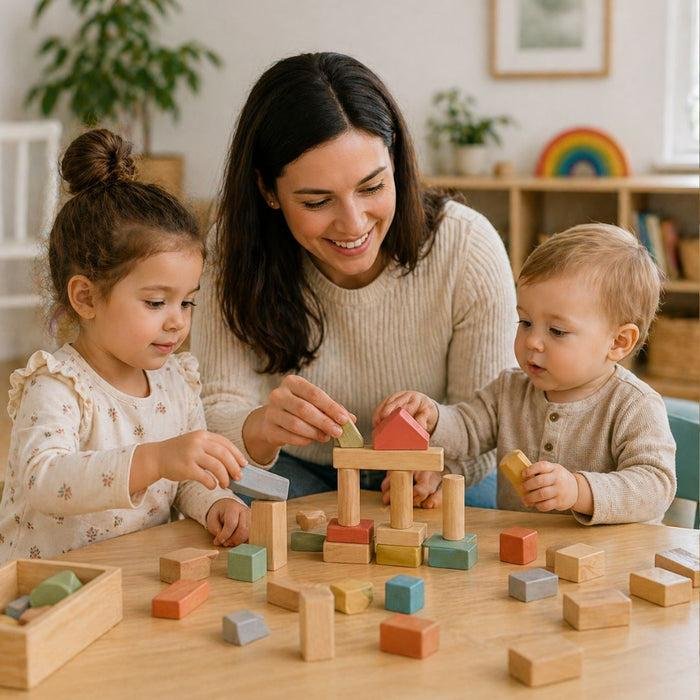
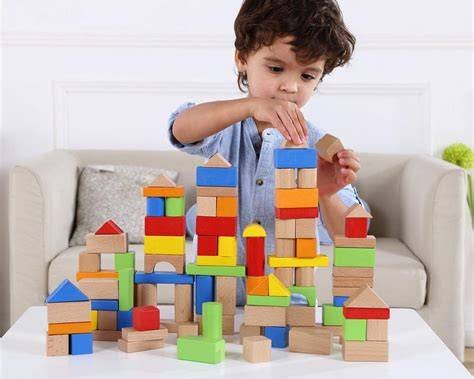
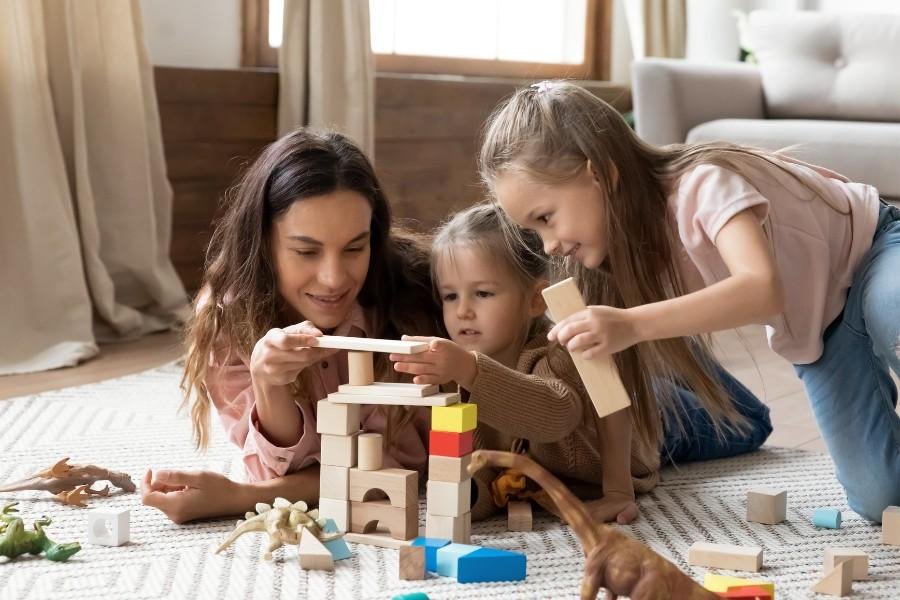
Children learn naturally when they are given opportunities to touch, explore, build, sort, match, and solve problems independently. Montessori-inspired activities at home do not require a special classroom or complicated materials. With a few carefully selected wooden toys, building blocks, puzzles, and board games, parents can turn everyday playtime into a meaningful learning experience.
At Book World Pakistan, parents can find educational toys designed to encourage creativity, motor development, and hands-on learning. The store specifically carries wooden toys, early-learning resources, puzzles, and board games for children.
What Is Montessori-Inspired Learning at Home?
Montessori-inspired play focuses on giving children opportunities to do things for themselves. Instead of constantly showing a child exactly what to do, parents prepare a safe activity, demonstrate it simply when necessary, and then allow the child time to experiment.
The objective is not simply to keep children busy. Activities can encourage independence, concentration, hand-eye coordination, fine-motor development, creativity, logical thinking, and problem-solving.
The best part is that many of these activities can easily become part of your child’s normal play routine.
1. Build Towers with Wooden Blocks
One of the easiest activities to introduce at home is wooden block building. Give your child blocks of different shapes and sizes and encourage them to build a tower. Once they become comfortable, try simple challenges such as:
- Build the tallest tower you can.
- Make a house for your toy animal.
- Build a bridge.
- Sort the blocks according to shape or size.
- Copy a simple structure made by a parent.
These activities encourage children to experiment with balance, spatial relationships, shapes, and problem-solving. Book World Pakistan carries wooden educational toys, including products such as its 250-piece wooden geometry puzzle/block set and 3-in-1 magnetic wooden drawing and puzzle board.
Parent Tip
Try not to correct every structure your child makes. If the tower falls, give them an opportunity to discover why it fell and how they might build it differently. That experimentation is an important part of learning.
2. Sorting Colors and Shapes
Sorting is a simple Montessori-inspired activity that can be repeated in many different ways. Place colorful wooden pieces or building blocks in front of your child and ask them to separate them into groups. For example:
- Red → one basket
- Blue → another basket
- Yellow → another basket
Later, change the challenge and sort by shape, size, or type instead. You can also introduce child-safe tongs or tweezers so children can transfer objects from one container to another. Book World Pakistan currently lists a Montessori-style Counting and Color Sorting Toy with tweezer/tongs, designed around sorting, early maths, and fine motor activities.
3. Create a Building Block Challenge
Building blocks can become much more than a construction toy. Parents can create small challenges such as:
- “Can you build a car?”
- “Can you make a house with two windows?”
- “Can you build something using only ten blocks?”
For older children, introduce more complicated challenges involving bridges, towers, vehicles, or imaginary cities. This type of open-ended activity combines creativity with planning and problem-solving.
4. Puzzle Time
Puzzles are excellent quiet-time activities because children need to observe carefully before deciding where each piece belongs. Start with large, simple puzzles and gradually introduce more complicated ones as the child becomes confident. Book World Pakistan’s toy collection includes wooden and magnetic puzzle products; for example, its 3-in-1 Magnetic Wooden Drawing Board combines magnetic puzzle pieces with drawing surfaces, while its wooden-toy selection also includes magnetic alphabet learning activities.
Instead of immediately putting a difficult piece into place for your child, try asking: “What happens if we turn it around?” This encourages the child to find the solution independently.
5. Play Simple Board Games as a Family
Family board-game time can be both entertaining and educational. Depending on the game, children may practice counting, matching, vocabulary, memory, patience, turn-taking, and following rules. Start with short games so younger children do not become overwhelmed. As their attention span develops, introduce games with more steps and strategy. Book World Pakistan’s educational range includes puzzles and board games intended to challenge older children as well as younger learners.
6. Make Patterns with Blocks
Arrange blocks in a simple pattern: Red – Blue – Red – Blue – ? Ask your child which block should come next. Later, make the sequence more challenging: Circle – Square – Triangle – Circle – Square – ? Pattern activities introduce early mathematical thinking without making the activity feel like a formal maths lesson.
7. Match Letters and Make Words
Montessori-inspired play can also support early literacy. Use wooden or magnetic letters to let children:
- find matching letters
- arrange A–Z
- identify beginning sounds
- match letters with pictures
- build simple words
For children beginning English literacy, Book World Pakistan’s Magnetic English Alphabet Book includes 134 pieces with upper- and lowercase letters and picture-based activities. Combine these activities with phonics and CVC practice as the child progresses.
8. Create a Montessori Activity Shelf
You don’t need dozens of toys available at the same time. Choose a small number of activities and arrange them neatly on a low shelf that your child can reach independently. For example, keep one wooden puzzle, one set of blocks, one sorting activity, and one simple board game available. After several days, rotate some activities. A simple environment can make it easier for children to select an activity, concentrate on it, and return the materials when finished.
9. Try a Montessori Busy Board
Busy boards can provide children with practical fine-motor challenges involving everyday movements. Book World Pakistan currently lists a Wooden Animal Door Lock Activity Busy Board for young children. It is designed around hands-on manipulation and fine-motor activity. Parents can sit nearby while allowing children to work out how different mechanisms operate themselves, with age-appropriate supervision.
10. Let Your Child Lead the Activity
One of the most useful changes parents can make is surprisingly simple: Give children enough time to explore. If your child wants to build the same tower repeatedly, complete the same puzzle again, or arrange blocks in an unusual way, that repetition can be valuable. Rather than focusing only on completing an activity correctly, encourage curiosity, concentration, and independent discovery.
Recommended Montessori & Educational Toys from Book World Pakistan
For parents who want to create more hands-on learning opportunities at home, explore wooden toys, building and construction toys, puzzles, sorting activities, busy boards, and educational board games at Book World Pakistan. The website’s current catalogue includes wooden geometry puzzles, magnetic wooden boards, sorting toys, Montessori busy activities, and other learning resources.
Explore Educational Toys at Book World Pakistan
Final Thoughts
Montessori-inspired learning at home does not have to be expensive or complicated. A set of wooden blocks, a puzzle, a sorting activity, or an educational board game can provide many different learning opportunities when children are encouraged to explore them independently.
Give your child time to build, sort, match, imagine, experiment, and try again. The goal is not simply to finish an activity—it is to develop the confidence and curiosity to discover how things work.
Book World Pakistan – Learning Through Books & Play
📱 WhatsApp: 03137854726
📦 Delivery Available Across Pakistan